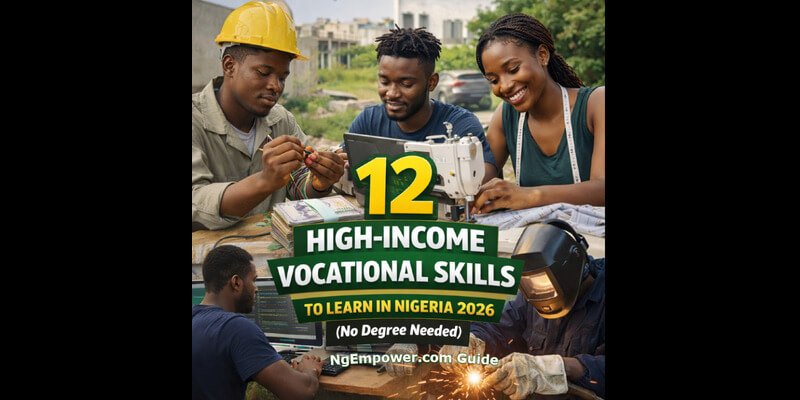
Best Vocational Skills to Learn in Nigeria in 2026
Not everyone wants to spend years in a university classroom before earning income. Many Nigerians are building stable careers through vocational skills. These are practical trades that you can learn through apprenticeship or hands on training.
If you are looking for high income skills in Nigeria without a university degree, this guide explains profitable vocational skills to consider in 2026. It also shows what each trade involves and how you can get started.
If you are planning to relocate in the future, you may also want to read our guide on Handwork Skills to Learn Before Leaving Nigeria to discover practical skills that can help you earn both locally and abroad.
What Are Vocational Skills?
Vocational skills are practical skills learned outside the traditional classroom system. Instead of lectures and exams, you gain knowledge through training, observation, and daily practice.
Most vocational skills in Nigeria are learned by:
Apprenticeship under an experienced professional
Vocational training centres
Short term technical courses
Private workshops and hands on coaching
You do not always need formal education to begin. What you need is interest, discipline, and consistency.
Many people who learn a trade eventually start their own small businesses. Others work with companies and earn steady income.
Why Vocational Skills Are Profitable in Nigeria
From experience across different sectors, skilled artisans rarely stay unemployed for long. Nigeria has a large population and constant demand for services.
People need:
Clothes
Food
Repairs
Home finishing
Beauty services
Event services
When you offer quality service, referrals follow.
Now let us look at some of the best vocational skills to learn in Nigeria in 2026.
List of Best Vocational Skills to Learn in Nigeria
1. Fashion Designing
Fashion remains one of the most profitable vocational skills in Nigeria. Tailors and fashion designers make custom outfits for weddings, parties, and everyday wear.
You can earn from:
Sewing native attire
Bridal dresses
Corporate wear
School uniforms
Many successful fashion designers started as apprentices. With good finishing and strong customer service, income grows quickly.
2. Automobile Servicing and Car Repair
Car ownership continues to increase across Nigeria. Vehicles need regular servicing and repairs.
As an auto technician, you can specialize in:
Engine repair
Electrical systems
Car diagnostics
Air conditioning repairs
Modern vehicles use computer systems. Learning auto diagnostics can increase your income potential.
3. Welding and Fabrication
Welders work on gates, doors, metal roofing, railings, tanks, and structural frames. Construction companies and private homeowners need these services.
This skill is practical and in steady demand. Once trained, you can work independently or with construction firms.
4. Catering and Food Services
Food business never goes out of demand. Catering is one of the most reliable trades in Nigeria.
You can operate as:
Event caterer
Small chops vendor
Restaurant owner
Home delivery cook
Good taste and hygiene are important in this field. Many caterers start small and grow through referrals.
5. Hairdressing and Barbering
Personal grooming is a regular expense for many Nigerians.
Barbers and hairstylists earn from:
Haircuts
Braiding
Wig making
Hair treatment
A well located salon can generate daily income. With time, you can expand into selling hair products.
6. Photography and Videography
Events such as weddings, birthdays, and corporate functions create steady demand for photographers.
You can earn from:
Event coverage
Studio photography
Passport photography
Video editing
The photography market is competitive, but quality work still attracts clients.
7. Plumbing
Plumbers install and repair water systems in homes and commercial buildings.
Services include:
Pipe installation
Leak repairs
Drainage systems
Bathroom fittings
Because plumbing requires technical knowledge, skilled plumbers charge good fees.
8. Carpentry and Woodwork
Carpenters build furniture, doors, roofing structures, cabinets, and interior fittings.
With training, you can specialize in:
Furniture making
Kitchen cabinets
Wardrobes
Roofing frames
Custom furniture is increasingly popular in urban areas.
9. Makeup Artistry
Makeup artists work mostly during events. Bridal makeup is especially profitable.
Income sources include:
Wedding makeup
Birthday events
Photoshoots
Makeup training classes
You can also sell beauty products to increase earnings.
10. Interior Decoration
Interior decorators improve the look of homes and offices.
This includes:
Curtain installation
Wall finishing
Furniture arrangement
Decorative lighting
As housing construction grows, demand for interior services also grows.
11. Painting
Professional painters handle residential and commercial buildings.
Painting involves:
Surface preparation
Color mixing
Interior painting
Exterior finishing
Skilled painters are often hired by developers and property owners.
12. Small Scale Manufacturing
Manufacturing can include producing:
Liquid soap
Body cream
Snacks
Candles
Household products
With proper branding and packaging, small production businesses can grow into large enterprises.
How to Choose the Right Vocational Skill
Before choosing a trade, consider:
Your personal interest
Market demand in your location
Startup cost
Training duration
Physical requirements
For example, welding may require physical strength. Makeup artistry requires attention to detail. Catering requires patience and hygiene discipline.
How to Start Learning a Vocational Skill in Nigeria
Here is a simple approach:
Identify a skill you are interested in
Find a reputable trainer or workshop
Agree on training duration and terms
Commit to learning consistently
Save money to buy basic tools
Start small and build experience
Many successful artisans started with little capital. What set them apart was dedication and quality service.
For those who prefer learning from home, our article on Affordable Vocational Education Courses You Can Take Online highlights budget friendly programs you can start immediately.
Frequently Asked Questions
Do vocational skills pay well in Nigeria?
Yes. Many skilled workers earn steady income. Some earn more than degree holders, especially when they run their own businesses.
How long does it take to learn a vocational skill?
Training time varies. Some trades take six months. Others may require one to three years of apprenticeship.
Can I learn more than one skill?
Yes. Some people combine trades. For example, fashion designers may also learn makeup. Photographers may learn video editing.
Do I need certification?
Certification is not always required. However, formal training certificates can improve credibility, especially when applying for contracts.
Practical Advice Before You Start
Do not rush into a trade because others are making money from it. Study the market in your area. Visit workshops. Ask questions. Observe how professionals operate.
Most importantly, focus on quality. Skilled workers who deliver good results build long term income through referrals.
Vocational skills in Nigeria remain a strong path for self employment and financial independence. If you are ready to learn and stay consistent, a practical trade can support you for many years.
💡 Stay Empowered with NgEmpower
Join our community for daily updates on jobs, skills, and financial growth opportunities.