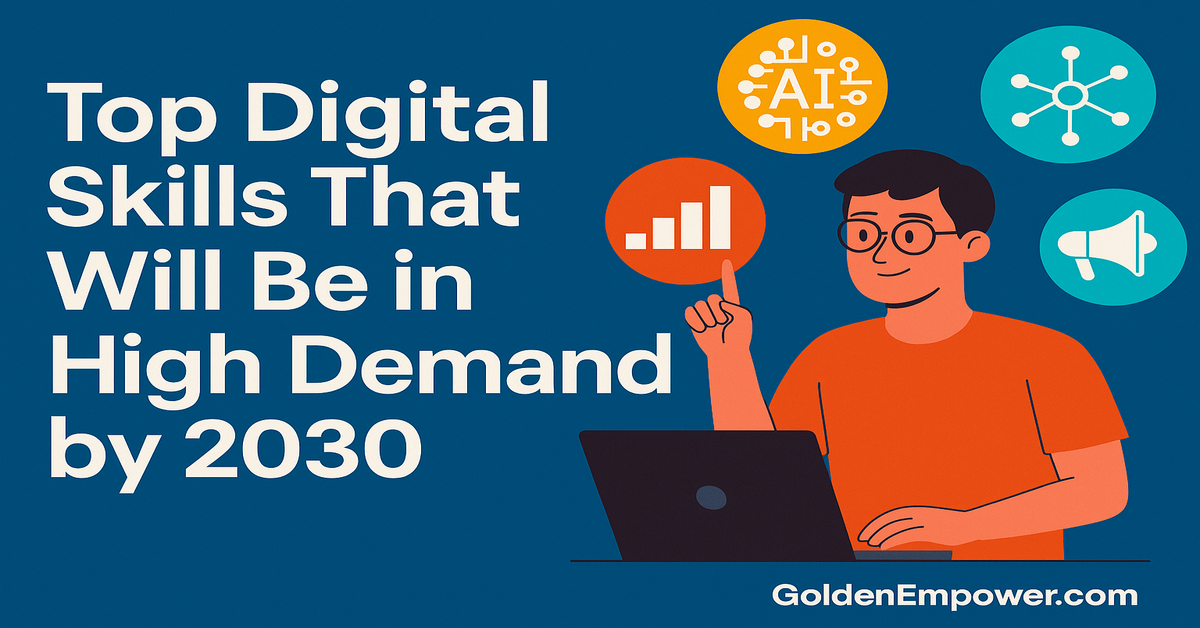
The world of work is changing faster than ever. Technology has redefined how people live, learn, and earn. By 2027, many of the jobs we know today will look completely different, while new ones will emerge that we can barely imagine right now.
To stay relevant, professionals must build digital skills for the future. These skills are becoming essential across every industry, from healthcare to finance to education.
To stay relevant, professionals must build digital skills for the future. If you’re just starting your career, you might also want to read our guide on how to start investing with little money to grow your income while learning.
According to reports from LinkedIn, Coursera, and Google Trends, employers are already searching for people who can blend creativity, data, and technology to drive innovation.
If you want to stay competitive in the coming years, here are the top digital skills that will be in high demand by 2027 and how you can start developing them today.
1. Artificial Intelligence and Machine Learning
Artificial intelligence is transforming the global economy. From virtual assistants to smart recommendation systems, AI is shaping how businesses operate and how people make decisions. Machine learning, a core branch of AI, allows systems to learn from data and improve without human input.
Professionals who understand how to develop, train, or apply AI systems will be critical in almost every industry.
What to focus on:
Basic Python programming
Understanding neural networks and algorithms
Applying AI tools to solve real-world problems
Where to learn:
Start with AI for Everyone by Andrew Ng on Coursera or explore Google’s AI Learning Hub, which offers beginner-friendly resources for aspiring AI professionals.
You can also check our post on Best side hustles that actually pay in 2025 if you want to turn your new AI knowledge into a remote income stream.
2. Data Analysis and Data Science
Data is now one of the most valuable resources in the modern economy. Every organization collects huge amounts of information from customers, websites, and systems, but very few know how to make sense of it.
That is why data analysts and data scientists are in high demand. They help businesses interpret data, identify trends, and make smarter decisions.
Core tools and skills:
Microsoft Excel for data organization
SQL and Python for data manipulation
Tableau or Power BI for visualization
Where to learn:
The Google Data Analytics Certificate on Coursera or the IBM Data Science Program are great starting points. These courses teach how to analyze data using real industry examples.
3. Cybersecurity and Data Protection
As more people work online, the risk of cybercrime grows. Businesses now face challenges such as data breaches, hacking, and online fraud. To address these threats, organizations need skilled cybersecurity professionals to protect sensitive information.
Cybersecurity is one of the fastest-growing career fields worldwide. Experts predict millions of unfilled cybersecurity jobs by 2030.
Key areas to master:
Network security and firewalls
Ethical hacking and penetration testing
Cloud security and data protection
Where to learn:
Enroll in the Google Cybersecurity Professional Certificate or CompTIA Security+ training. Both programs teach practical defense strategies and global security standards.
4. Digital Marketing and SEO
Businesses no longer rely only on traditional advertising. Online visibility is now the foundation of success. That is why digital marketing remains one of the most valuable digital skills for the future.
Professionals who understand how to attract and engage audiences through digital platforms will continue to be in high demand.
Essential marketing skills:
Search engine optimization (SEO)
Social media and content marketing
Pay-per-click advertising
Email marketing automation
Where to learn:
Start with free courses from Google Digital Garage, HubSpot Academy, or Coursera’s Digital Marketing Specialization.
If you are building your own website, these skills can help you rank higher in Google search results and qualify for AdSense approval.
5. User Experience (UX) and User Interface (UI) Design
Great design is about more than visuals. It is about creating a smooth, enjoyable experience for the user. UX and UI designers ensure that websites, apps, and digital tools are easy to use, accessible, and visually appealing.
By 2030, every brand will need professionals who can create intuitive interfaces that meet the needs of diverse audiences.
Skills to develop:
User research and journey mapping
Wireframing and prototyping
Mastery of tools such as Figma and Adobe XD
Where to learn:
The Google UX Design Certificate on Coursera provides a complete introduction to UX and UI design, from research to product testing.
6. Cloud Computing
Almost every major company now relies on cloud-based services to store data, run applications, and collaborate across borders. This shift has made cloud computing one of the most valuable skills in the modern job market.
Professionals who can build, secure, or manage cloud systems will continue to be in high demand as digital transformation accelerates.
Popular platforms to learn:
Amazon Web Services (AWS)
Microsoft Azure
Google Cloud Platform
Courses to consider:
Start with AWS Cloud Practitioner Essentials or Google Cloud Fundamentals on Coursera to understand the basics of cloud architecture and deployment.
7. Blockchain Technology
Blockchain is best known for powering cryptocurrencies, but its applications go far beyond digital money. By 2030, blockchain will support secure online voting systems, transparent supply chains, and tamper-proof digital identities.
Professionals who understand how blockchain works and how to apply it to real-world challenges will be in strong demand.
Skills to focus on:
Blockchain basics and smart contracts
Decentralized applications (dApps)
Cryptography and digital assets
Where to learn:
Take the Blockchain Specialization by the University at Buffalo on Coursera or explore courses from edX that cover blockchain fundamentals.
8. Automation and Artificial Intelligence Tools
Automation is redefining how work gets done. By 2030, nearly every company will use AI-driven tools to handle repetitive tasks, improve efficiency, and reduce costs.
Professionals who can integrate these tools into workflows will save time and improve results.
Useful automation platforms:
ChatGPT for writing and research assistance
Canva for design automation
Zapier for workflow automation
Notion and Trello for project management
Learning how to combine these tools strategically can make you an indispensable asset in any organization.
9. Web and App Development
Every business today needs an online presence, and that trend will continue to grow. Web developers and app designers are responsible for building and maintaining the digital platforms that connect brands with users.
As e-commerce and remote services expand, professionals with coding and design expertise will find opportunities worldwide.
Core technologies to master:
HTML, CSS, and JavaScript for web development
React or Vue for front-end frameworks
Python or Node.js for back-end development
Where to learn:
freeCodeCamp, Codecademy, and Coursera’s Full Stack Web Development course provide hands-on learning experiences for beginners.
If you’re interested in turning coding into income, our article on 10 Smart Ways to Save Money in Your 20s shares how to budget and invest while building your tech career.
10. Data Privacy and Digital Ethics
The future of technology depends on trust. As companies collect and analyze more data, ethical questions about privacy, consent, and bias are becoming more important.
Understanding how to use technology responsibly will be a key professional advantage by 2030.
Core topics to understand:
Data protection and compliance laws such as GDPR
Ethical use of artificial intelligence
Responsible design and inclusive innovation
Where to learn:
Consider Harvard’s Data Privacy and Technology course or Google’s Responsible AI training for a foundation in ethical digital practices.
How to Learn Digital Skills Effectively
Building digital skills does not require a university degree. What matters most is consistency and practical application.
Here are proven ways to develop expertise:
Start with one skill. Focus on one area that aligns with your interests or career goals.
Use free learning platforms. Coursera, LinkedIn Learning, and Google Digital Garage offer free or affordable courses.
Apply what you learn. Create small projects or join freelancing platforms to practice.
Earn certifications. Certificates strengthen your professional profile and prove your credibility.
Stay current. Follow industry leaders and tech platforms on LinkedIn to keep up with trends.
Learning a little every day compounds over time, just like investing.
Apply what you learn. Create small projects or join freelancing platforms to practice. You can find more practical earning ideas in our post on side hustles that pay.
Why These Skills Matter for the Next Decade
According to LinkedIn’s Future of Skills Report, more than 80 percent of jobs by 2027-2030 will require some level of digital literacy. Automation and artificial intelligence will replace certain roles, but they will also create millions of new opportunities for those with the right capabilities.
Investing in digital skills for the future will not only help you stay relevant but also give you the freedom to work from anywhere and adapt to changes in technology.
These skills are your foundation for financial stability and career growth in the next decade.
Conclusion
The future belongs to those who keep learning. The demand for digital skills for the future is growing across industries, and now is the perfect time to begin.
Whether you choose data analysis, cloud computing, or digital marketing, every skill you build today adds value to your professional journey. Stay curious, keep practicing, and take consistent action. Your effort today will define your success in 2030 and beyond.
Frequently Asked Questions (FAQs)
1. Which digital skills will be most in demand by 2030?
Artificial intelligence, data analysis, and digital marketing are expected to be among the top skills employers seek across industries.
2. Can beginners learn these skills without a tech background?
Yes. Many online platforms, such as Coursera and Google Digital Garage, offer beginner-level courses that require no prior experience.
3. Are these skills useful globally?
Absolutely. The digital economy is borderless, and these skills are in demand worldwide.
4. How long does it take to learn one digital skill?
Most professionals can build a solid foundation in three to six months with regular practice
💡 Stay Empowered with NgEmpower
Join our community for daily updates on jobs, skills, and financial growth opportunities.